| Southern Maryland residents are urged to take precautions Thursday as dangerously hot temperatures and poor air quality are expected across the region.
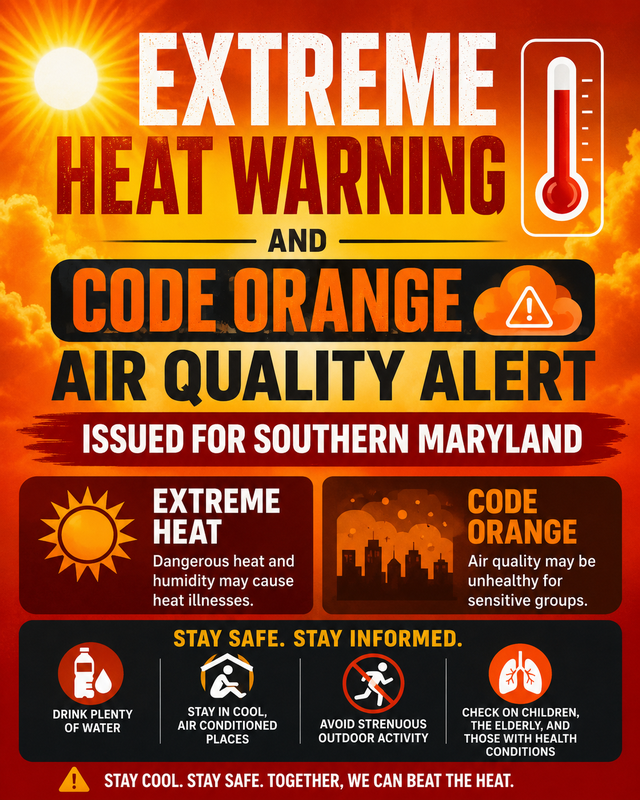
The National Weather Service Baltimore/Washington has issued an Extreme Heat Warning until 8 p.m. Thursday, July 2, for portions of Maryland, including Charles, St. Mary’s and Calvert counties. A second Extreme Heat Warning is also in effect from 10 a.m. to 8 p.m. Friday, July 3. An Extreme Heat Watch has been issued for Saturday morning through Saturday evening.
Heat index values — what the temperature feels like when humidity is factored in — are expected to reach up to 111 degrees Thursday and up to 112 degrees Friday. On Saturday, heat index values as high as 110 degrees will be possible.
The Maryland Department of the Environment has also issued a Code Orange Air Quality Alert for Thursday in Southern Maryland. A Code Orange alert means air pollution levels may become unhealthy for sensitive groups, including children, older adults, people with asthma, and those with heart or lung disease.
Residents are encouraged to limit time outdoors, avoid strenuous outdoor activity during the hottest part of the day, and stay in air-conditioned spaces whenever possible. Those who must be outside should wear lightweight, loose-fitting clothing, take frequent breaks, and drink plenty of water.
Heat-related illnesses can develop quickly during periods of extreme heat and humidity. Symptoms of heat exhaustion may include heavy sweating, weakness, dizziness, nausea, headache, or cool and clammy skin. Heat stroke is a medical emergency and may include confusion, loss of consciousness, hot skin, or a very high body temperature. Anyone experiencing signs of heat stroke should call 911 immediately.
Residents are also reminded to check on family members, neighbors, older adults, and anyone who may not have reliable access to air conditioning. Pets should be brought indoors or provided with shade and plenty of fresh water.
Children and pets should never be left unattended in vehicles. Temperatures inside a parked vehicle can become life-threatening within minutes, even with windows cracked.
The hazardous weather outlook also notes that severe thunderstorms may be possible Friday through Monday, particularly during the afternoon and evening hours. Residents should monitor local forecasts and be prepared for changing weather conditions.
Community members can reduce health risks during this period by staying hydrated, avoiding unnecessary outdoor exertion, using air conditioning when available, and following guidance from local emergency management, public health officials, and the National Weather Service.
For additional information on air quality conditions, residents may visit the Maryland Department of the Environment’s air monitoring resources. Continue to follow local public safety agencies for updates, preparedness information, and heat safety reminders. |